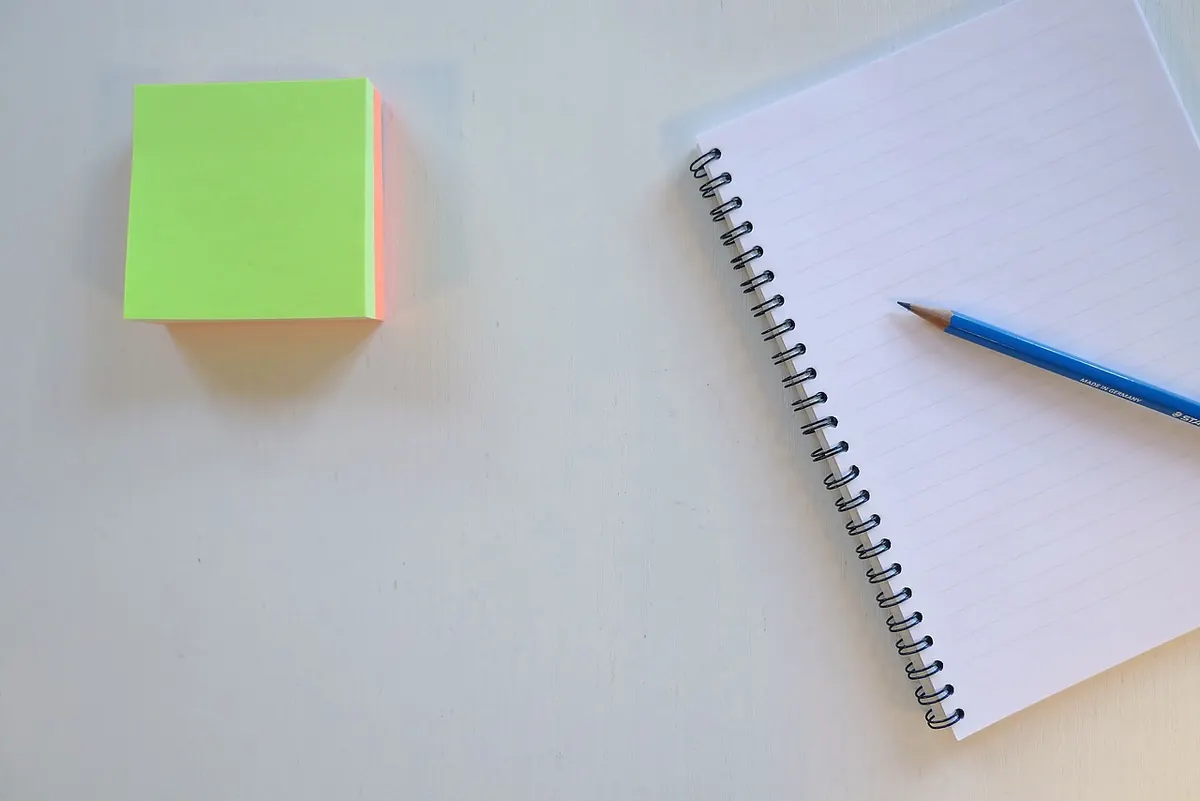
A blank notebook is a strange sort of invitation. For the first few days it looks like possibility; by the second week it can feel like a test you have not revised for. That shift rarely has anything to do with discipline or talent. It usually comes down to a handful of small habits that quietly turn a pleasant practice into one more thing to fail at.
The fixes are unglamorous and quick. None of them require a new planner, a course, or a personality transplant. Here are the slips beginners make most often — and what to do instead.
You buy a beautiful hardback with thick cream paper, then leave it on the shelf because your handwriting feels unworthy of it. Meanwhile the practice stalls. The notebook becomes an ornament, and journaling becomes something you will start properly once things calm down.
Treat stationery as a tool, not a reward. A cheap exercise book from the supermarket does the job and removes the pressure to be impressive. If you already own the nice one, break it in deliberately: date the first page, write one sentence, scuff the cover. If a page goes wrong, draw a single line through it and carry on. The point is to get words onto paper, not to produce an object worth photographing.
Somewhere around the third entry, a lot of people start composing. Sentences get tidier. Feelings get summarised rather than described. You begin editing as you go, which slows you down and, worse, makes you less honest.
Nobody is marking this. Remind yourself of that by writing in a way that is deliberately unpolished: fragments, arrows, bad spelling, a list that trails off halfway. If the thought of someone finding it bothers you, write a line at the top of the first page saying it is private and unfinished. That small permission does more for your honesty than any prompt.
If a sentence sounds like a report, it is probably not the sentence you needed to write.
The advice to write every day is well meant and frequently counterproductive. Miss two evenings and the streak is broken; the notebook now carries a faint sense of shame. Before long it is easier not to open it at all.
Lower the bar until the habit is almost impossible to skip. Two lines count. One sentence counts. A single word counts on a bad day.
Keep the notebook where you will see it — beside the kettle, on the pillow, in the bag you take to work — and aim to never miss twice. One missed day is just a day. Two becomes a new routine.
Beginners often assume a journal is for milestones: holidays, arguments, big decisions. Ordinary Tuesdays feel too dull to record, so nothing gets recorded at all, and the notebook sits empty for weeks.
The opposite approach works better. Write about the small, specific, forgettable things, and the important material turns up on its own. A conversation you keep replaying, the way a room smelled, the reason you snapped at someone in the queue at half past eight. Detail is what makes an entry worth rereading in five years; a summary of your week rarely is.
If you are stuck, answer one question in a few lines. What did I avoid today? What took more energy than I expected? What would I say if I could be honest without consequences? Answering one is enough.
Colour-coded trackers, elaborate spreads, mood charts in twelve columns. These things look satisfying in photographs and can be genuinely useful, but they arrive with a lot of rules attached. If maintaining the system takes longer than writing in it, the system will lose.
Start with plain pages and add structure only when you notice you are missing it. If you keep losing track of dates, rule a margin for the date. If you want to spot patterns in your mood, write a single word at the top of each entry rather than building a grid. Borrow prompts freely, but do not treat any method as a standard you have to meet. A journal is a workshop, not an exam.
Set a timer for five minutes and work through this once. Then repeat it tomorrow, ideally at the same time, attached to something you already do: after your morning coffee, or once the dinner plates are cleared.
Once a month, spend ten minutes skimming what you have written. Read it the way you would read a letter from a friend: look for what recurs, and mark any line that still feels true. That skim is where much of the value sits — not in the writing itself, but in noticing what you keep returning to.
If journaling starts to stir up something heavy that will not settle, talk it through with someone qualified rather than trying to write your way out alone. For ordinary days, the rules are simple: keep the notebook close, keep the entries short, and let it be untidy. That is not a compromise on the practice. It is the practice.
Photo: Pexels / Pixabay