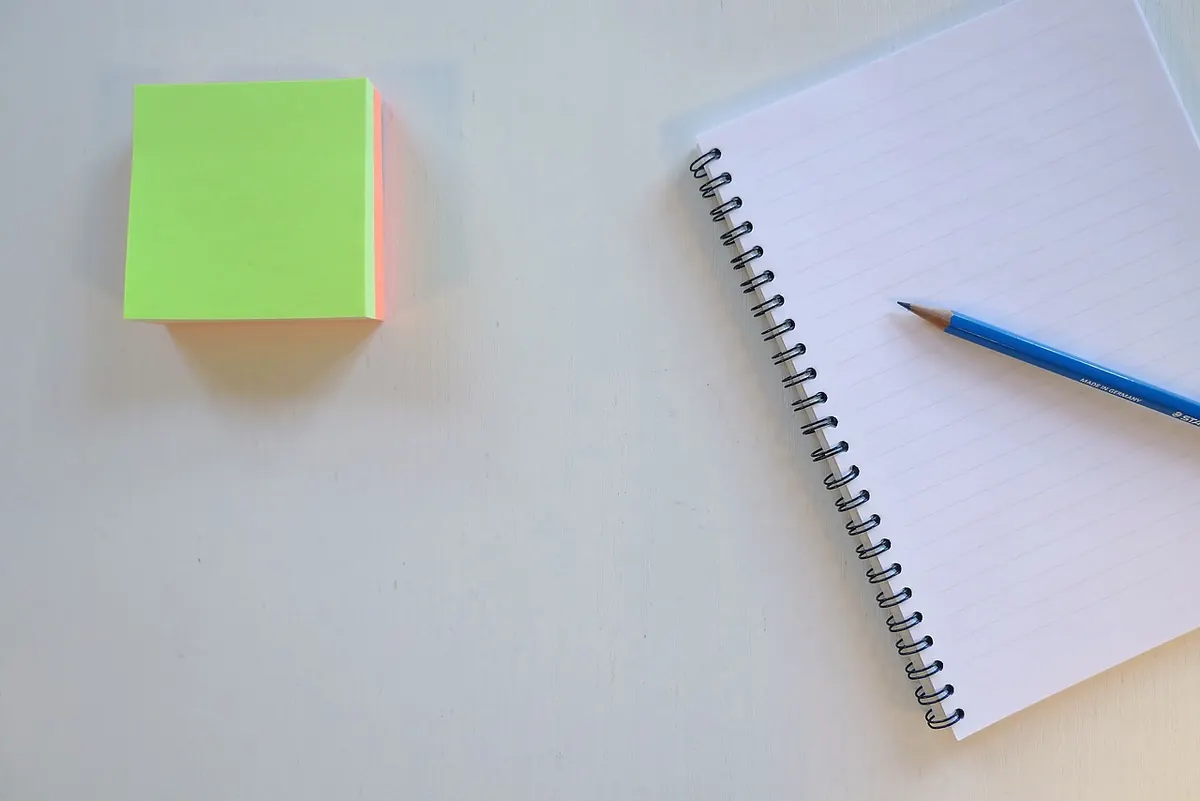
A notebook is a small decision until you're three pages in. That's when you notice the lines are too narrow for your handwriting, or the dots are tugging a sketch into a grid you didn't want. Ruling is the quietest choice you make when you buy a journal, and it shapes what actually ends up on the page. Lined, dotted and plain paper each nudge you in a different direction. Here's how they behave in practice, and how to work out which one suits the way you write.
Ruling is a set of instructions you give yourself before you've written a word. Lines say keep going, in rows, top to bottom. Dots say you can stay in rows, or you can build something. Blank says decide for yourself. None is better; each one makes some things easy and other things fiddly.
Spacing matters as much as the style. Rule widths vary widely between brands — an A5 notebook might have anything from tight 5mm lines to roomy 8mm — so check before you buy, particularly if your handwriting is large or full of loops. If your letters shrink on narrow lines and sprawl across wide ones, that isn't a flaw in your writing. The page sets the pace, and it's easier to change the page than the handwriting.
Lined paper is the safest place to start and, for many people, the one they come back to. Rules hold your handwriting level, keep paragraphs consistent, and make a page look tidy even when your thoughts weren't. If you write long entries — morning pages, a daily record, letters you never send — lines keep you moving, because you never have to decide where the next sentence goes.
They make counting easy too. Want ten lines a day, or one page each morning? Ruled paper hands you the measurement for free.
The trade-off is that lines fight anything that isn't a sentence. Mind maps bulge into the margins, boxes and arrows look improvised, and very wide rules leave small handwriting floating in the middle of nowhere.
Dotted paper sits in the middle, and that's the point. Small dots at regular intervals give you a grid to follow without drawing a box around every word. Write prose across them and you'll barely notice the dots are there; rule a table, sketch a small chart or lay out a week's tracker without reaching for a ruler.
For a bullet journal, or anything with habit trackers and project logs, dotted is usually the best fit. The dots fade behind handwriting, so you can switch between prose, lists and boxes on the same spread without the page looking like a form.
There are two snags. Dots can feel insistent if you like a clean, quiet page, and the grid makes a loose, sprawling entry look untidy, because your words zigzag in and out of alignment. If your handwriting is very small, a 5mm grid can feel cramped; if it's very large, the dots may be too fine to guide you at all. Try a page before committing to a thick notebook.
Plain paper removes the rules altogether. It's the best surface for mind maps, diagrams, sketches, paste-ins and anything that expands sideways, and the kindest page for poetry or very short entries that would look stranded on three ruled lines.
The cost is consistency. Line spacing drifts, margins wander, lists tilt, and entries are harder to scan later because nothing lines up with anything else. That's a fair trade if your journal is mostly visual. It's frustrating if you want to reread a year of daily entries in order.
Slip a ruled or dotted sheet underneath the page you're writing on, so faint lines show through. You get structure when you want it and blank paper when you don't. Writing in one wide column, with generous margins left alone, also keeps a blank page from turning into a sprawl.
The quickest way to choose is to start from what you actually do on the page, not from which spread looks best in a photograph.
Photo: tookapic / Pixabay